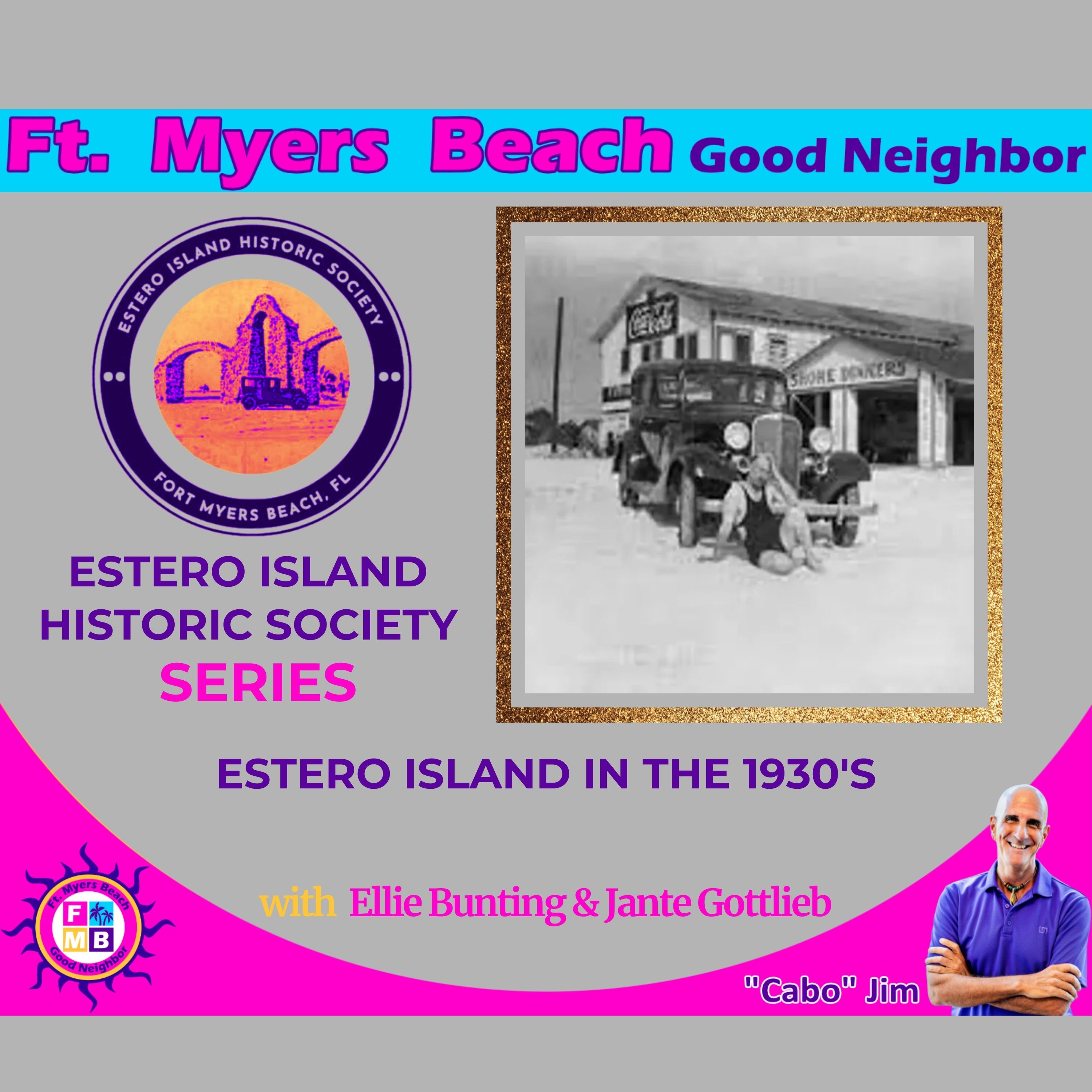
FMBGN-EIHS-From Sand To Skyline: How Early Developers, Casinos, And Storms Shaped Fort Myers Beach
A fifty-cent toll changed the fate of Fort Myers Beach. When early developers Thomas Phillips and Jack Delisle couldn’t get county funding for a bridge, they sold bonds, built their own, and rolled open a brand-new future in May 1921. From that moment on, everything accelerated: beachside casinos, bathhouses, and a handful of hotels welcomed the first waves of visitors, while locals still steered work around the tides. You’ll hear how cars once drove along the wide, hard-packed sand to reach the southern stretches, and why the first traffic jam arrived almost as soon as the toll booth did.
We dig into the storms that reshaped the map and the mindset. Hurricanes in 1921, 1926, and 1928 damaged roads and spans, yet the island pushed ahead with big, distinctive ideas. Phillips’s Arches rose in 1925 as a ceremonial gateway to a waterfront vision called San Carlos on the Gulf, supported by seawalls you can still spot. A new direct road from Gladiolus and McGregor to the beach slashed travel time and supercharged tourism. The 1928 swing bridge—hand-cranked into the 1950s—became both a bottleneck and a beloved landmark, pivoting open for shrimp fleets and stalling cars in long, salty lines. It’s an unforgettable picture: arches framing a low steel span, masts bristling in the channel, and a community learning to share space between leisure and labor.
We also chart the working water’s heartbeat. Before shrimp took over, mullet powered the economy, smoked and dried into hearty staples that fed families and markets. As hospitality grew—Gulf Shore Grill, Silver Sands, and other early names—the island balanced grit with charm. A few 1921 cottages still stand as proof of sturdy craft and stubborn hope. The larger pattern becomes clear: a cycle of boom and bust, progress and pause, that carried Fort Myers Beach from the roaring 20s into the quiet rebuild of the 30s and the demands of the war years. It’s not just history; it’s a guide to resilience and smart access, the forces that still decide how this shoreline lives.
If this story sparked a memory or a question, share it with us, then subscribe, leave a quick review, and send the episode to someone who loves coastal history. Your notes help us decide which corners of the island’s past to open next.
Estero Island Historic Society
161 Bay Road Fort Myers Beach, Florida, 33931
esteroislandhistoricsociety.org
Ft Myers Beach-Good Neighbor
To Nominate Someone to be Featured
Or
To Subscribe to the Newsletter
CLICK HERE
https://cabowabojim.com/listen-to-podcasts/